
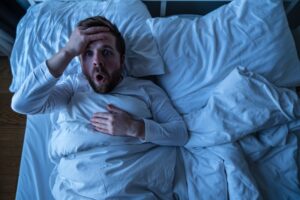
Most people associate obstructive sleep apnea with loud snoring, daytime fatigue, and interrupted sleep. However, many people are surprised to learn that sleep apnea may also affect what happens while you’re dreaming. If you’ve been experiencing frequent nightmares or disturbing dreams, your sleep disorder could be playing a role.
While sleep apnea doesn’t directly cause nightmares, the connection between the two is well documented.
How Sleep Apnea Disrupts Sleep
Obstructive sleep apnea (OSA) occurs when the muscles in the back of the throat relax during sleep, temporarily blocking the airway. As breathing repeatedly stops and starts, oxygen levels drop, and the brain briefly wakes the body to restore normal breathing.
These interruptions can happen dozens or even hundreds of times each night. Even if you don’t remember waking up, your sleep becomes fragmented, preventing you from reaching the deep, restorative stages of sleep your body needs.
The Link Between Sleep Apnea and Nightmares
Dreams occur primarily during rapid eye movement (REM) sleep. Because sleep apnea frequently disrupts REM sleep, it can alter both the frequency and intensity of dreams.
Some people with untreated sleep apnea report vivid, disturbing dreams involving suffocation, drowning, choking, or being trapped. These dream themes may occur because the brain is responding to reduced oxygen levels or breathing difficulties while you’re asleep.
Although not everyone with sleep apnea experiences nightmares, research suggests that treating sleep apnea may reduce the frequency of disturbing dreams for many patients.
Other Symptoms to Watch For
Nightmares alone don’t necessarily indicate sleep apnea. However, if they’re accompanied by other symptoms, it may be time to seek an evaluation. Common signs of obstructive sleep apnea include:
- Loud, chronic snoring.
- Gasping or choking during sleep.
- Excessive daytime sleepiness.
- Morning headaches.
- Dry mouth upon waking.
- Difficulty concentrating.
- Irritability or mood changes.
If your bed partner notices pauses in your breathing while you sleep, that’s another important warning sign.
The good news is that sleep apnea is highly treatable. Depending on the severity of your condition, treatment may include lifestyle changes, a CPAP machine, or a custom oral appliance provided by a dentist trained in sleep medicine. Improving your breathing at night can lead to more restful sleep, increased daytime energy, and, for some people, fewer vivid or frightening dreams.
About the Practice
Do you snore loudly at night? Do you often experience daytime fatigue? If so, you may benefit from sleep apnea therapy. Drs. Glenn Thompson and Gary Radz have extensive sleep apnea training and can provide you with a carefully personalized oral appliance to keep you breathing normally throughout the night and allow you the deep, restorative rest you so desperately need and deserve. With a friendly staff and convenient office hours, there’s no reason to suffer any longer. Book your appointment through our website or call our Denver office at (303) 377-5337.